
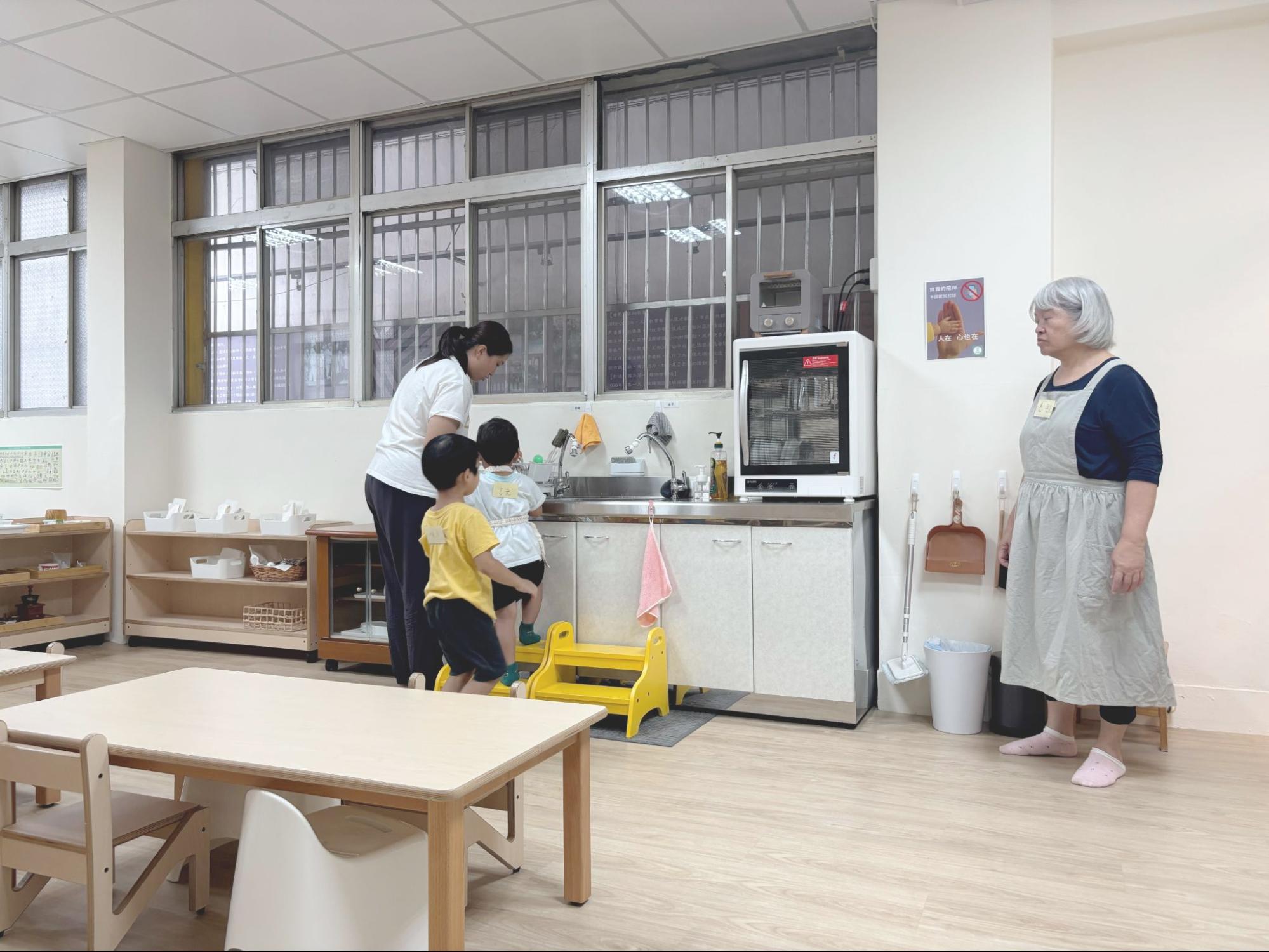
Walk into the Corner of Hope Montessori Family Space in Wugu, and you’ll see a silver-haired facilitator patiently guiding children and parents as they spend unhurried, focused time together.
Two generations of the same family serve here side by side. A mother and her mother-in-law work together, and the youngest member of the family, who has just turned two, comes along with Mom and Grandma and takes part in the everyday life of the space.
For this family, raising a child, working, and serving others can go hand in hand. With support from one another, different generations can learn together and step in when someone needs help. That same spirit has made this little corner a welcoming community for other parents working hard to care for their children.
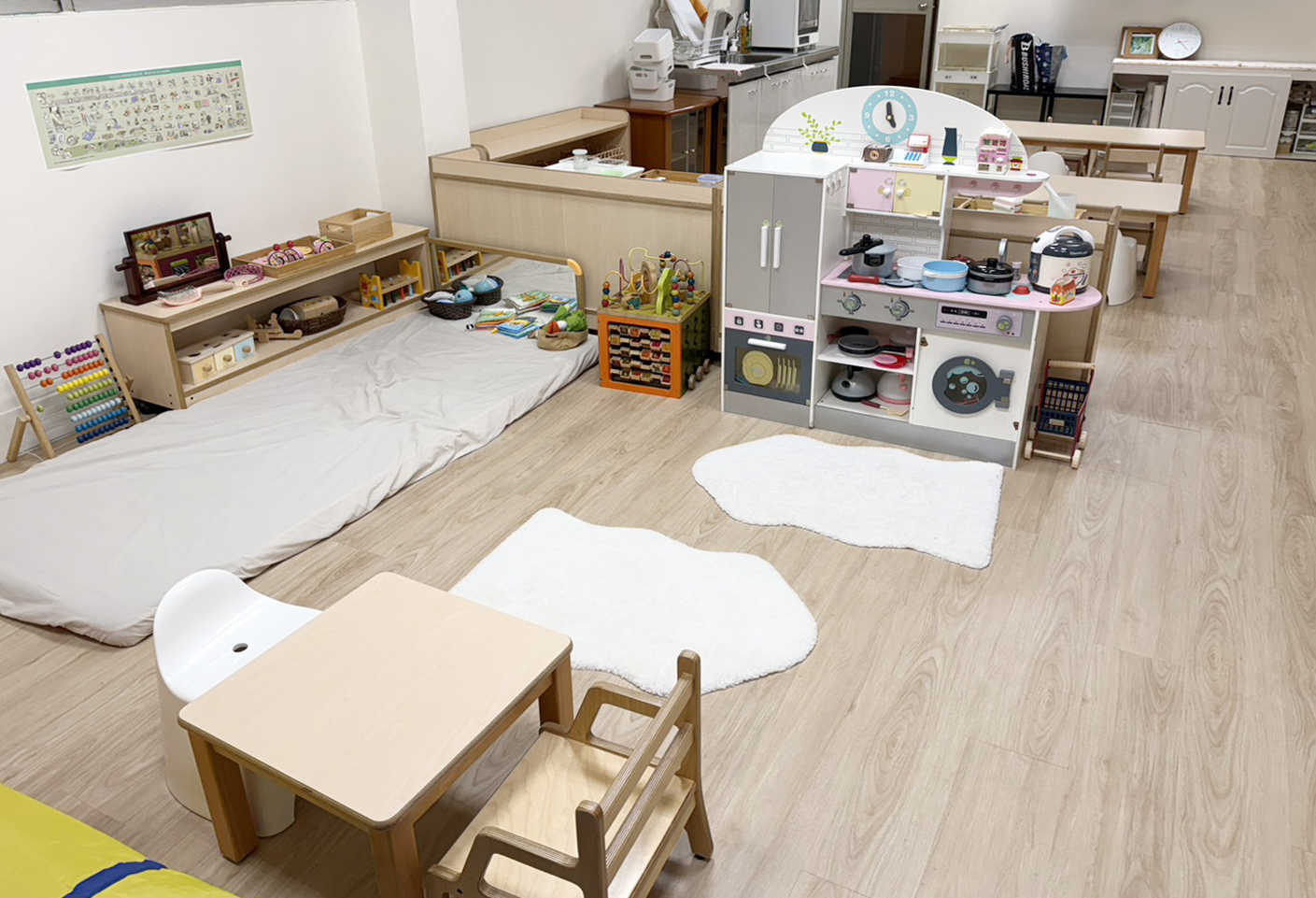
Aiwen Huang, a facilitator at the Wugu space, describes what happened this way. “I often say we lost this space and got it back. It came back to life.” Behind those words is a story of uncertainty, of stepping back, and of finding the strength to try again.
From New Mom to Facilitator — Can I Really Do This?
When plans for the Wugu Montessori Family Space first took shape, a team was already in place to get it started. Aiwen had recently become a mother when she was invited to join the training. She saw a chance to better understand her child’s development and put what she learned into practice at home. Eager to learn, she said yes.
Then plans changed. Just as the space was ready and the materials were in place, the pastor who had been leading the project left following a staffing change. Aiwen found herself the only person left to carry it forward.
Her baby was still under a year old, just beginning to walk, and she was still figuring out how to be a mother. She was already caring for her child around the clock. The prospect of running the whole space on top of that left her anxious.
Can I really do this?
The question kept coming back. She thought carefully about her time, her energy, and what she could manage. In the end, she decided to decline.
For many parents of children under three, that struggle is familiar. Young children need a great deal of time and care. There are responsibilities at work and everyday tasks waiting at home. Even when there’s something you genuinely want to do, you may have to set it aside for a while because you’re short on time or energy, or because you aren’t sure how you’ll manage it all.
Through it all, a supervisor at the COH Training Center kept encouraging her. “Give it a try. God will provide!”
Those words made Aiwen pause and rethink what it would take to begin. She could take one small step before she felt fully ready.
Her Mother-in-Law Became Her Teammate
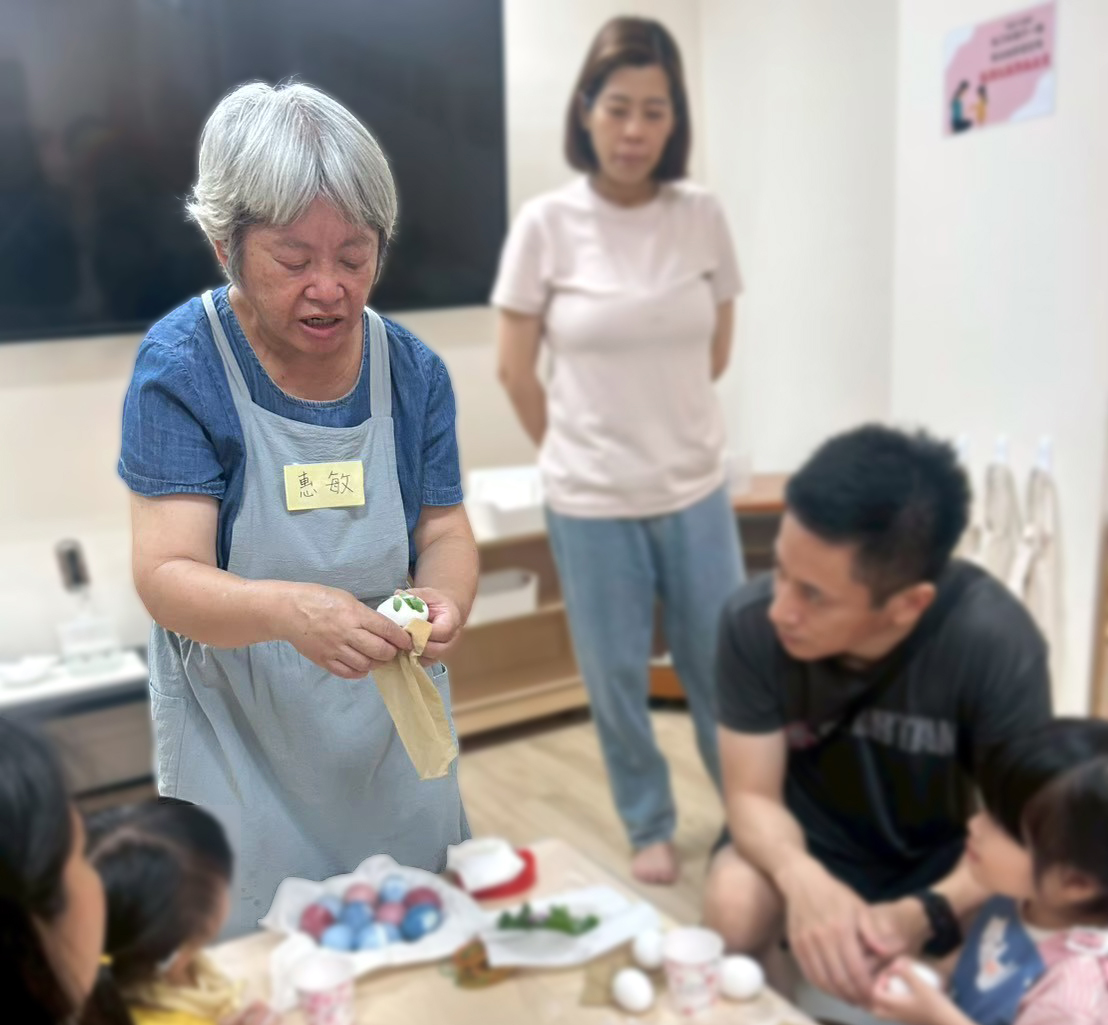
When the Wugu space opened, Aiwen was its only facilitator. The church backed her, and her family kept cheering her on. Her mother-in-law was the first to offer to help.
She had known Aiwen since she was growing up, long before Aiwen became her daughter-in-law. The trust they had built over the years gave them a strong foundation for working together. They came from different generations and had different experiences of raising children, but they shared a belief in what Corner of Hope was doing. They were willing to talk openly, care for the child together, and share the work of running the space.
Her mother-in-law became someone Aiwen could talk to about what her child needed, share the workload with, and count on for understanding when she was tired. For parents balancing work and raising a young child, that kind of support is especially precious.
Seeing a Child Grow and a Mother Find Her Courage
After the space opened, a mother who lived nearby learned about it through a Facebook post. When she realized how close it was to home, she decided to bring her child along and see what it was like.
At the time, her child needed extra support with language and other areas of development and often found it difficult to interact with adults and other children. Alongside professional support and early intervention, regular visits to the space gave the child time to become familiar with the surroundings. After about a month, the mother began to notice changes.
In a setting where the child felt safe, confidence began to grow. A child who had once found it hard to express themselves began saying more and even singing out loud. Before long, every Saturday brought the same routine. The child would get up early, get dressed, and call excitedly for Mom to hurry so they could go.
For parents, small changes like these can mean a great deal. When a child begins choosing activities independently and expressing themselves in more ways, parents get to see what their child is capable of. They begin to trust that a well-prepared environment and patient support can help their child grow at their own pace. As this mother watched her child make progress, she regained some of her own courage and grew more confident about walking alongside her child through each new stage.
For Aiwen, this is what makes the Montessori Family Space so meaningful. Children have room to explore and learn. As parents accompany them, they find support, see reasons for hope, and realize they have people to turn to when parenting is hard.
From One Facilitator to a Team
Aiwen had expected facilitator training to take a considerable commitment. There was a lot to learn, from understanding early childhood development and learning how to guide children to preparing Montessori materials and keeping the space clean and orderly. She wondered how many people would be willing to put in that much time and effort.
A year later, the Wugu space had grown to five facilitators. Someone had even joined the team to manage its social media and help with registrations and other administrative tasks.
As the team settled into its work, Aiwen could share the responsibilities. She could also bring her own child and take part as a parent. With time to slow down and explore together, she could watch how her child learned in the space. Little by little, she saw her child develop a sense of order in everyday life.
A Child Can Stay Close While Mom Pursues What She Loves
It’s easy to see why work and childcare can seem hard to combine. A young child may need an adult’s attention at any moment. Work takes focus, and tasks still need to get done. When a child comes along to a workplace, people may wonder whether the parent can concentrate and whether the child will get the care they need.
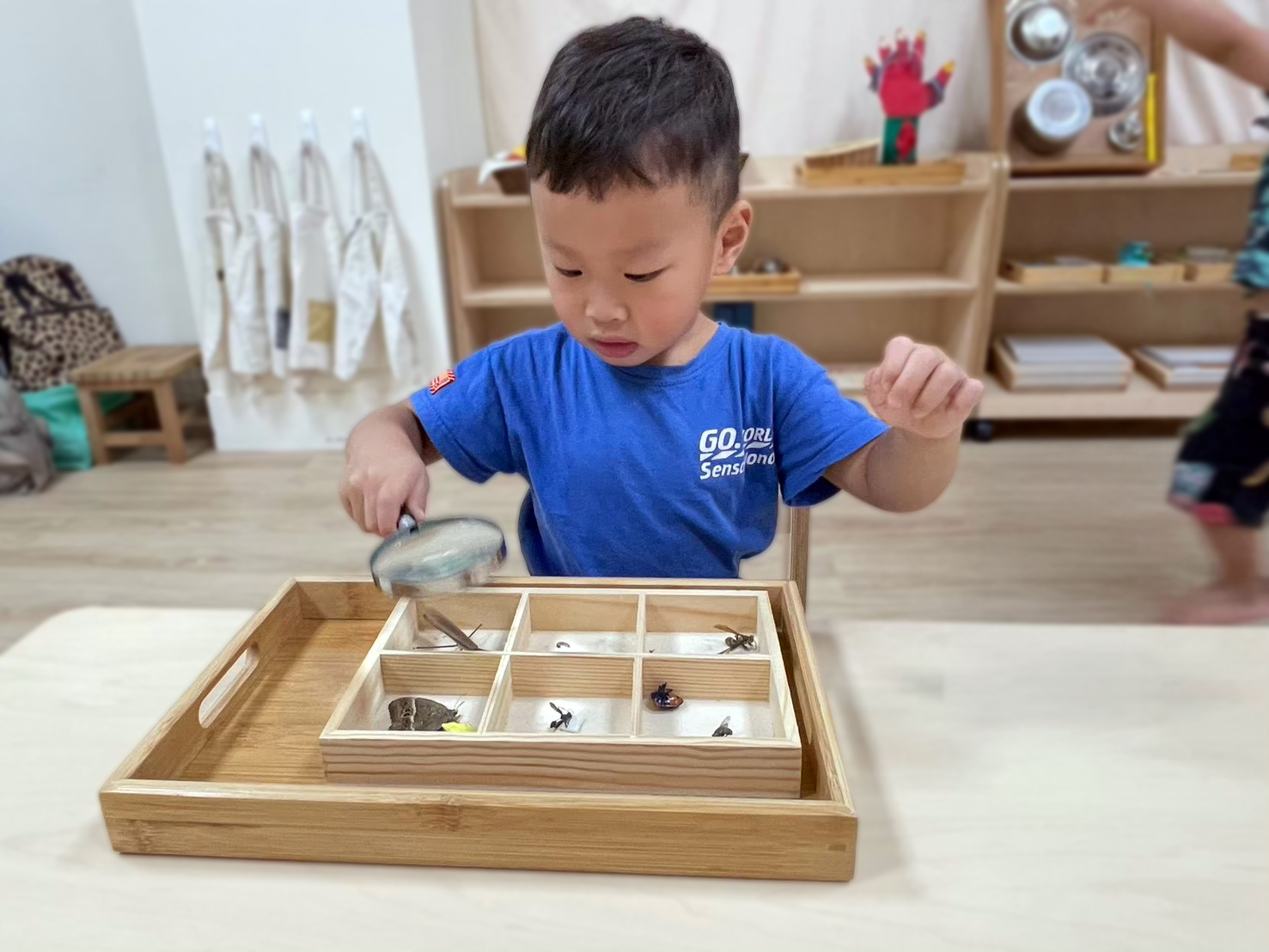
Bringing her child along as she worked at the space gave Aiwen a different perspective. She saw how much her child could learn by watching, imitating, and using their senses. Over time, those experiences helped her child begin to understand what Mom was doing and why it mattered.
Whenever the child came with Mom and Grandma to get the space ready, they watched the adults put each Montessori material neatly in its place, wipe down every corner, and polish the dishes and utensils they would soon use. By watching and joining in, the child grew familiar with these ordinary routines.
Children learn through the small things that happen day after day as well as through activities adults plan for them. Watching how adults work, look after their surroundings, and interact with others is part of how a child gets to know the world.
For Aiwen’s child, Mom’s work became a part of life they could see and experience firsthand. The child could see how Mom gave her time, connected with others, and learned to ask for help when things got hard.
The Wugu space reminded Aiwen that motherhood can leave room to keep exploring what else she wants to do and how she wants to grow.
Letting Love Flow So Parents Feel Less Alone
Looking back, Aiwen can see how much changed after she took that first step. She started out doubting herself and carrying the work alone. Then the church offered its support, her mother-in-law stepped in, and a team took shape as more people chose to help.
Parents began sharing the changes they saw in their children. Team members volunteered to take on tasks. Her mother-in-law became the partner she could count on most. Through those relationships, Aiwen discovered how much care she received while giving it to others.
Support and love often show up quietly. Someone lends a hand. Someone offers a word of encouragement and means it. A group of people keeps showing up and sharing the work.
As Aiwen walked alongside other families, she felt others walking alongside her. Parents can share the work of raising children and still make room for what they love and how they want to grow.
And my God will meet all your needs according to the riches of his glory in Christ Jesus.
— Philippians 4:19 (NIV)